Short-Term Rental vs Hotel in Israel: Why Travelers Are Switching

Something has shifted in how people travel to Israel. Over the past few years, we have watched a clear pattern emerge across our portfolio: the travellers booking short-term rentals are not budget backpackers looking for a cheap bed. They are families, couples, and business travellers who have stayed in hotels before — often good ones — and have made a deliberate choice to stop.

The reasons are consistent, and they go beyond price. This is not an article about why hotels are bad. Hotels in Israel are often excellent. But there is a growing segment of travellers for whom the hotel model simply no longer fits — and understanding why matters whether you are planning your first trip or your tenth.

The space equation

This is the most immediate difference, and the one our guests mention first. A standard hotel room in Tel Aviv — even at the four- or five-star level — is typically 22 to 28 square metres. That is a bed, a bathroom, a desk, and not much else. For a couple on a weekend break, that works. For a family of four spending a week, it does not.

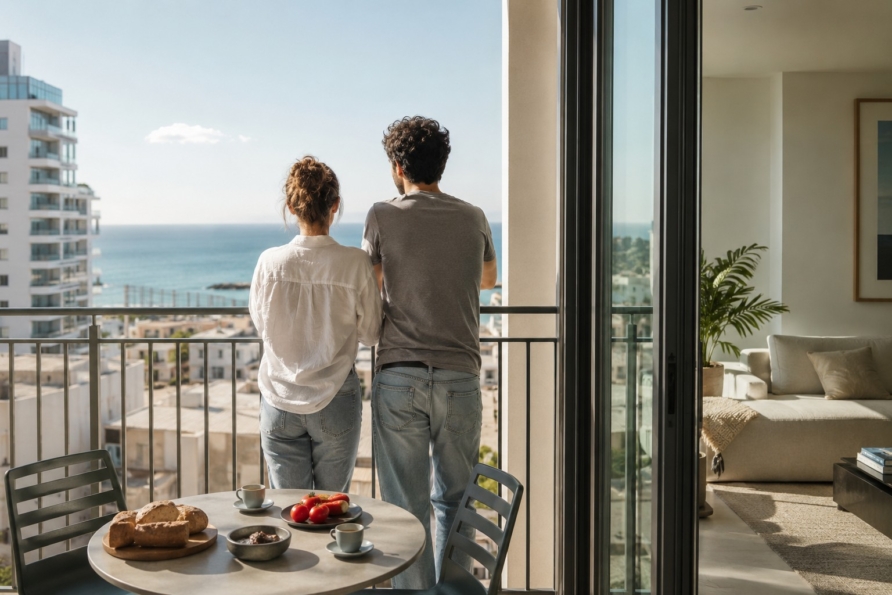
A two-bedroom apartment in the same neighbourhood gives you 70 to 90 square metres. Separate bedrooms. A living room where you can spread out after a long day of sightseeing. A kitchen table where the kids can eat breakfast while you drink coffee in peace. A balcony. Storage for the beach gear, the groceries, the suitcases that otherwise live on the hotel room floor.

The difference is not marginal. It is the difference between a holiday where everyone is on top of each other and one where the accommodation actively improves the trip. We see it in the reviews consistently — guests do not talk about thread count or lobby design. They talk about space.

The kitchen changes everything
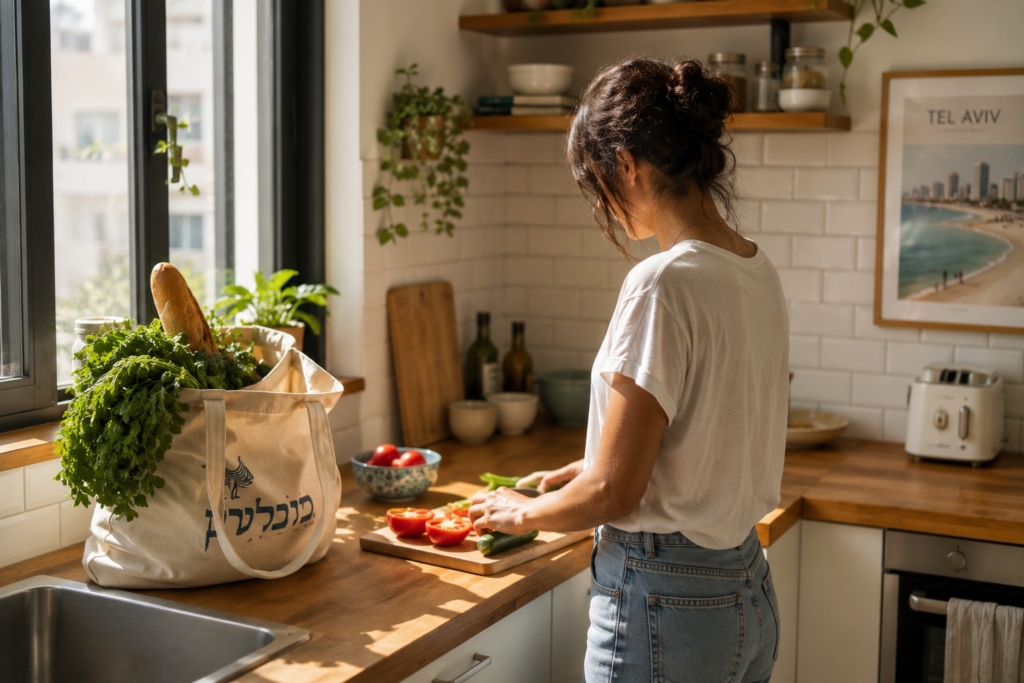
Israel is one of the great food countries in the world. The produce is extraordinary, the markets are vibrant, and the culinary traditions — drawn from dozens of communities — are endlessly diverse. Having a kitchen is not about avoiding restaurants. It is about participating in the food culture differently.

A typical guest in one of our Tel Aviv properties will walk to the Carmel Market in the morning, buy fresh bread, halloumi, tomatoes, and za’atar, and make breakfast at home. Lunch might be hummus at Abu Hassan in Jaffa. Dinner is a reservation at one of Tel Aviv’s excellent restaurants. The kitchen does not replace eating out — it complements it, and it saves the cost and fatigue of three restaurant meals a day over a week-long stay.

For families with young children, the kitchen is not a luxury — it is a necessity. Feeding a toddler in restaurants three times a day for seven days is exhausting and expensive. The ability to prepare simple meals at your own pace changes the dynamics of a family holiday fundamentally.

The economics are clear

Let us be direct about the numbers, because this is where the conversation usually gets vague.

A well-located hotel room in central Tel Aviv — not luxury, but a solid four-star — runs between 800 and 1,500 NIS per night depending on the season. A family that needs two rooms is looking at 1,600 to 3,000 NIS per night.

A professionally managed two-bedroom apartment in the same area — with a kitchen, a living room, and often a balcony — typically costs 1,000 to 1,800 NIS per night. That is one apartment replacing two hotel rooms, at a lower total price, with significantly more space.

Add the savings from self-catering breakfasts and some lunches — conservatively 200 to 400 NIS per day for a family of four — and the total cost difference over a week is substantial. We are not talking about marginal savings. We are talking about thousands of shekels that can go toward experiences, restaurants, and activities instead.

The economics tilt further in favour of rentals for longer stays. Hotels rarely discount significantly beyond the third or fourth night. Rental pricing often becomes more attractive as the stay extends.

Location without compromise

Hotels cluster. In Tel Aviv, the large hotel properties concentrate along the HaYarkon strip and the beachfront. In Jerusalem, they cluster near the Old City and Mamilla. In Eilat, they line the North Beach promenade. These are good locations, but they are the only locations hotels offer.

Short-term rentals exist across every neighbourhood. Want to stay in Neve Tzedek, the most charming residential area in Tel Aviv? There are no major hotels there, but there are excellent apartments. Want to be in the German Colony in Jerusalem, steps from the cafés and restaurants of Emek Refaim? Same story. Want a quiet villa in Caesarea, walking distance from the Roman ruins? Hotels cannot offer that. Rentals can.

This is not a minor point. The neighbourhood you stay in shapes your experience of a city. Being in a residential area — walking to the same café every morning, knowing the shortcut to the beach, recognising the shopkeeper — is a fundamentally different way of travelling. Hotels, by design, insulate you from this. Rentals, by design, immerse you in it.

Privacy and flexibility

There is no housekeeping knocking at 10am. No breakfast window closing at 10:30. No lobby to cross in your beach clothes. No minibar charges. No noise from the hallway at midnight.

These are small things individually, but they compound. The flexibility of a rental — arriving late, leaving early, eating when you want, sleeping when you want, living at your own rhythm — removes the low-grade friction that hotels inevitably create. For travellers who have experienced both, this friction becomes harder to accept once they have tasted the alternative.

Israel specifically amplifies this advantage. Tel Aviv is a late-night city — coming home at 2am and making a snack is natural here. Shabbat means some hotel restaurants close while your own kitchen is always open. Summer heat means you want to rest in the afternoon in genuine comfort, not in a hotel room where the air conditioning battles the hallway noise.

What rentals do not do well (and how to mitigate it)

Transparency matters, so let us address the other side.

Hotels offer consistency. You know what you are getting with a Hilton or a Dan. The check-in is smooth, the towels are replaced, the concierge is at the desk. With rentals, the experience depends entirely on the quality of the property and the management behind it.

This is the single most important factor in choosing a rental: who manages it. A self-managed property listed by an individual owner can be excellent or terrible, and there is no brand to guarantee the outcome. A professionally managed property — with consistent standards, responsive support, and local knowledge — eliminates this uncertainty.

The other gap is daily housekeeping. Most rentals do not include it (though many offer it as an add-on). For stays of a week or more, this means you are managing your own space. For most travellers, this is a non-issue. For those accustomed to full hotel service, it is worth knowing in advance.

The profile of the switching traveller

Based on what we see across our properties, the travellers making the switch share several characteristics. They have visited Israel before, or they are experienced international travellers. They value space and independence over service and amenities. They are often families with children, or couples on stays of five nights or more. They cook at least some meals. And they care about neighbourhood — they want to live somewhere, not just sleep somewhere.

If that description fits you, a rental is likely the better choice. If you prefer the structure, service, and predictability of a hotel — that is entirely valid too. The point is not that one is objectively better. The point is that the choice should be conscious rather than habitual.

What to look for in a short-term rental in Israel

If you are considering a rental for your Israel trip, a few things matter more than others.

Professional management. Look for properties managed by a company rather than an individual. Professional managers maintain consistent quality, handle problems quickly, and provide local knowledge that enhances your stay. This is the single biggest predictor of a good rental experience.

Location specificity. Do not just search “Tel Aviv.” Know which neighbourhood you want — or let the management company guide you based on your priorities. A good manager will match you to the right area, not just the right apartment.

Verified reviews. Read the reviews carefully. Look for mentions of responsiveness, cleanliness, and accuracy of the listing. Ignore the star rating — read what people actually say.

Clear communication. The quality of pre-arrival communication tells you everything about the quality of the management. If the check-in instructions are clear, detailed, and proactive, the rest of the experience will follow.

For a broader look at planning your trip, our complete guide to traveling in Israel covers destinations, transport, and practical tips.

For detailed city-by-city recommendations, download our free city guides.

The bottom line

The shift from hotels to rentals is not a trend — it is a structural change in how people travel, and Israel is one of the markets where it makes the most sense. The combination of high hotel prices, compact cities with distinct neighbourhoods, extraordinary food markets, and a culture that rewards living locally rather than observing from a distance makes the rental model genuinely superior for a large and growing segment of travellers.

We see it every week in the feedback from our guests. The space, the kitchen, the neighbourhood, the flexibility, the value. These are not marketing points — they are the reasons people come back.

Explore our portfolio of professionally managed properties across Israel at keyhost.online.
Tel Aviv vs Eilat: Where to Stay in Israel?

Two cities, two completely different experiences. Tel Aviv is a cosmopolitan Mediterranean metropolis — buzzing, creative, and relentlessly modern. Eilat is a sun-soaked Red Sea resort town perched at the edge of the desert, famous for its coral reefs and year-round warm weather. Both are exceptional in their own right, but the right choice depends entirely on what kind of trip you’re planning.

This guide breaks down everything you need to know to choose between Tel Aviv and Eilat for your Israel stay.

At a Glance

 Tel AvivEilat
VibeUrban, cosmopolitan, trendyResort, relaxed, nature-focused
BeachMediterranean, sandy, busyRed Sea, crystal-clear, snorkeling
NightlifeWorld-classLimited
Culture & FoodExceptionalBasic
Best seasonSpring & AutumnWinter & Spring
Ideal forCity lovers, foodies, couplesFamilies, divers, sun seekers
Distance from Jerusalem1 hour4.5 hours

Tel Aviv: The City That Never Sleeps

Tel Aviv is Israel’s cultural and economic capital — a city that somehow manages to be both deeply Mediterranean and unmistakably global. It was named one of the world’s top food cities by multiple international publications, and its nightlife scene is legendary.

Why Choose Tel Aviv

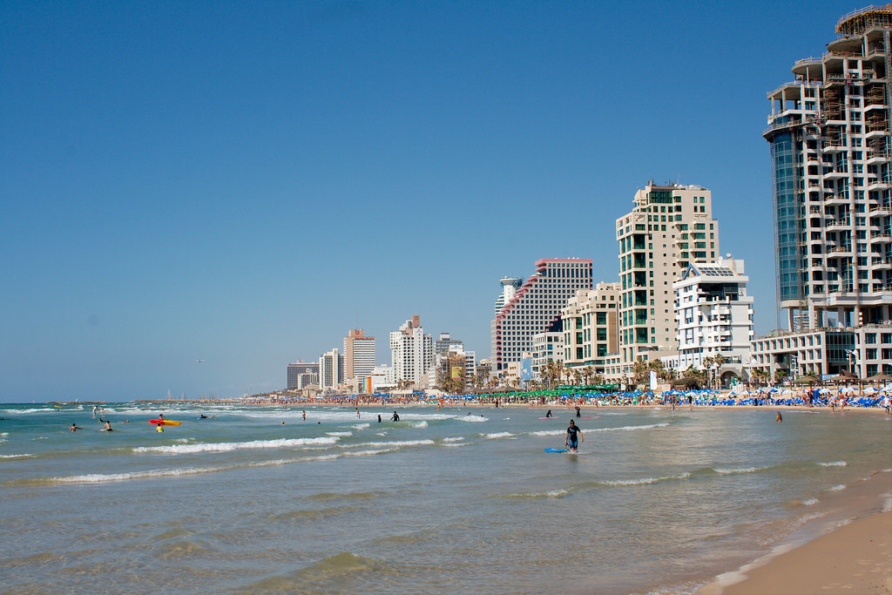
The Beach Scene Tel Aviv’s 14-kilometer beachfront is one of the great urban coastlines in the world. Gordon Beach, Frishman Beach, and Hilton Beach each have their own personality — from family-friendly to party-forward. The water is warm from May through October, and the promenade (Tayelet) is always alive with joggers, cyclists, and café-goers.

Food and Culture Tel Aviv is a food lover’s paradise. From Carmel Market’s overflowing stalls to cutting-edge restaurants in the Florentin neighborhood, eating in Tel Aviv is an experience in itself. Add world-class contemporary art at the Tel Aviv Museum, the UNESCO-listed White City’s Bauhaus architecture, and the ancient port of Jaffa, and you have a city that rewards exploration.

Nightlife Tel Aviv’s nightlife is genuinely world-renowned. Clubs in the Florentin and HaTachana areas stay open well into the morning. The city also has a thriving bar scene, rooftop terraces, and live music venues for every taste.

Connectivity Tel Aviv’s Ben Gurion Airport is Israel’s main international hub. Most flights land here, making it the natural starting point for any Israel trip. Day trips to Jerusalem, Caesarea, and the Dead Sea are all easily done from Tel Aviv.

Who Should Stay in Tel Aviv

  • Couples and solo travelers looking for a vibrant city break
  • Foodies and culture enthusiasts
  • First-time visitors to Israel who want to experience the country’s modern identity
  • Anyone combining Israel with a multi-city itinerary

Eilat: Israel’s Red Sea Resort

Eilat sits at the very tip of Israel, bordered by Jordan to the east and Egypt to the west. It has just one purpose: making sure you have a perfect holiday in the sun. The city is compact, easy to navigate, and built entirely around leisure.

Why Choose Eilat

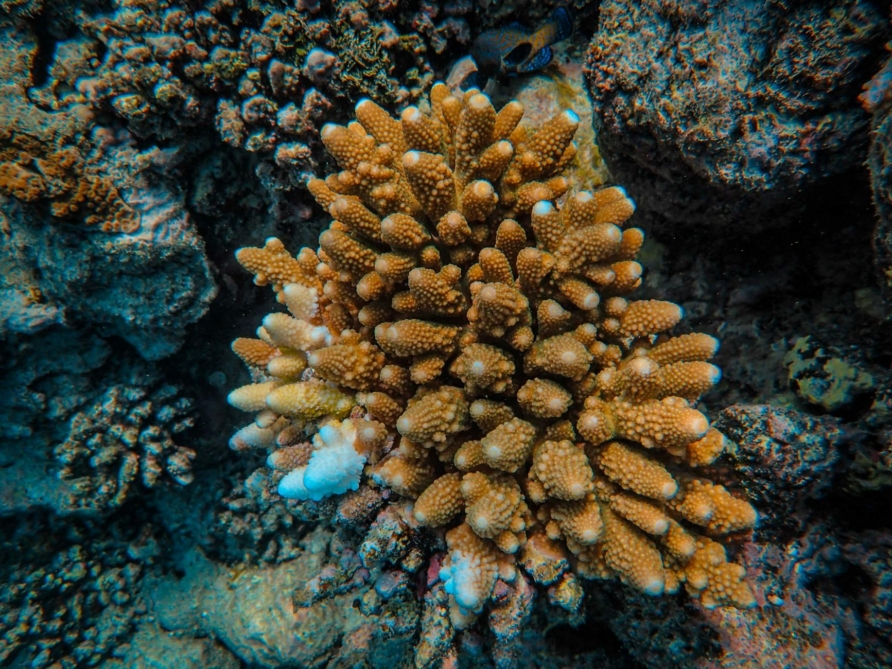
The Red Sea Eilat’s water is warm year-round and astonishingly clear. The coral reefs of the Red Sea are among the most biodiverse in the world, and Coral Beach Nature Reserve is one of Israel’s most spectacular natural sites. Whether you snorkel, dive, or simply wade in the shallows, the underwater world here is unforgettable.

Year-Round Sunshine While Tel Aviv can be rainy and chilly in winter, Eilat enjoys over 360 days of sunshine per year. Temperatures in January hover around 20–22°C — ideal for beach days when the rest of Israel is cold. This makes Eilat the go-to destination for Israelis escaping winter, and an exceptional choice for European travelers visiting between November and March.

Water Sports and Outdoor Activities Beyond snorkeling and scuba diving, Eilat offers glass-bottom boat tours, parasailing, jet skiing, and deep-sea fishing. Inland, the dramatic desert landscape of the Negev and the Timna Valley provide excellent hiking and jeep safari opportunities.

Family-Friendly Eilat is extremely well set up for families. Dolphin Reef — where you can swim alongside trained dolphins — is a highlight for children. The city’s compact size and resort atmosphere make logistics easy, and the calm Red Sea waters are safe for young swimmers.

Who Should Stay in Eilat

  • Families with young children
  • Divers and snorkeling enthusiasts
  • Travelers visiting Israel in winter
  • Sun seekers who prioritize beach time over city exploration

The Key Differences

Weather and Seasonality

Tel Aviv’s best seasons are spring (March–May) and autumn (September–November) — warm, sunny, and uncrowded. Summer is hot and humid. Winter is mild but can be rainy.

Eilat, by contrast, is a winter destination at its best. The dry desert climate means virtually no rain, and winter temperatures are perfect for swimming. Summer in Eilat can be extremely hot (up to 42°C), making beach days challenging.

Cost

Both cities are comparable in terms of accommodation pricing. Tel Aviv tends to be slightly more expensive for dining and nightlife. Eilat, being a duty-free zone, offers cheaper alcohol and some imported goods — a notable perk for longer stays.

Getting There

Tel Aviv is served by Ben Gurion International Airport with connections worldwide. Eilat is reached via Ramon Airport, which receives some direct international flights (particularly from Europe) but has fewer connections. Domestic flights between Tel Aviv and Eilat take about 50 minutes.

Can You Do Both?

Absolutely — and many visitors do. A classic Israel itinerary might combine:

  • 3–4 nights in Tel Aviv (city, food, culture, beaches)
  • 2–3 nights in Jerusalem (history, religion, Old City)
  • 3–4 nights in Eilat (diving, relaxation, Red Sea)

This gives you the full spectrum of what Israel has to offer. A short domestic flight or a 4.5-hour drive connects Tel Aviv and Eilat.

Need help planning? Our free city guides cover both destinations in detail.


Where to Stay: Short-Term Rentals vs Hotels

For both destinations, short-term rentals offer a significant advantage over hotels — more space, a kitchen, and a more authentic local experience. KeyHost manages premium holiday rentals across Israel, including properties near Tel Aviv’s beachfront and in the Eilat area.

Whether you’re planning a romantic getaway in Tel Aviv or a family week in Eilat, staying in a well-managed short-term rental gives you the flexibility and comfort that hotels simply can’t match.

👉 Browse available properties at keyhost.online

Verdict: Which Should You Choose?

Choose Tel Aviv if: you want culture, food, nightlife, and a vibrant city beach scene. If this is your first time in Israel or you’re visiting spring through autumn, Tel Aviv is the natural choice.

Choose Eilat if: you’re traveling in winter, you’re a diving or snorkeling enthusiast, or you’re visiting with young children who will love the calm Red Sea waters and dolphin experience.

Choose both if: you have 10 days or more and want to experience everything Israel has to offer.

Israel is a small country — and that’s its greatest advantage. You don’t have to choose just one destination.

Short Term Rentals in Caesarea: The Complete Guide to Israel’s Most Extraordinary Coastal Town

Caesarea is one of Israel’s best-kept secrets — and one of its most remarkable destinations. Built by Herod the Great two thousand years ago as the most ambitious construction project of the ancient world, the city was a Roman capital, a Crusader fortress, and a Byzantine port before it was abandoned to the sea. Today it has been reborn as one of Israel’s most exclusive residential communities and most extraordinary visitor experiences: a place where you can swim in the Mediterranean in the morning, walk through a Roman amphitheatre in the afternoon, and dine at a waterfront restaurant in the evening, all within a few hundred metres of each other.

For visitors seeking short term rentals in Caesarea, this guide covers everything — from the town’s extraordinary history to the practicalities of staying here, and why this small stretch of Mediterranean coastline offers one of the most distinctive experiences available anywhere in Israel.

Why Caesarea?

Most visitors to Israel focus their itineraries on the obvious anchors — Tel Aviv, Jerusalem, the Dead Sea. Caesarea rarely makes it onto the standard first-time itinerary, which is precisely what makes it so rewarding for those who discover it. For a full country overview, see our complete guide to traveling in Israel.

The town sits on the Mediterranean coast roughly halfway between Tel Aviv and Haifa, about 50 kilometres north of Tel Aviv. It is small — the resident population of the modern town numbers only a few thousand — but what it offers is extraordinary. The Caesarea National Park encompasses one of the most impressive archaeological sites in the Middle East: a Roman harbour, an amphitheatre that still hosts concerts, a hippodrome, Crusader fortifications, Byzantine mosaics, and the remains of Herod’s palace, all set directly on the Mediterranean coast.

Beyond the archaeology, Caesarea has developed over the past two decades into one of Israel’s most desirable residential communities. The modern town — built adjacent to the ancient site — is immaculately maintained, leafy, and home to a significant number of Israel’s most successful business and cultural figures. The infrastructure that comes with this — the restaurants, the galleries, the golf course, the marina — is of a consistently high standard.

For visitors, the combination of extraordinary history, Mediterranean beauty, excellent food, and a calm, unhurried atmosphere makes Caesarea one of the most pleasurable places to spend a few days in Israel.

The History You Are Walking Through

Understanding what Caesarea was helps you understand why visiting it feels so different from other historical sites. This was not a minor Roman outpost — it was one of the most important cities in the eastern Mediterranean for over a thousand years.

Herod’s Vision

Around 22 BCE, Herod the Great — the same ruler who built the expansion of the Temple Mount in Jerusalem — undertook the construction of an entirely new city on the Mediterranean coast. There was no natural harbour here; Herod created one from scratch, using an innovative technique of pouring hydraulic concrete underwater to build the harbour walls. The resulting port, called Sebastos (the Greek translation of Augustus, to whom the city was dedicated), was one of the largest artificial harbours in the ancient world.

The city Herod built around this harbour was designed to impress. A vast amphitheatre capable of seating 10,000 spectators. A hippodrome for chariot racing. A temple to Augustus and Roma on a raised platform visible from the sea. Paved streets on a Roman grid. A sophisticated sewage system flushed by tidal action. By any measure, it was an extraordinary achievement.

Roman Capital and Early Christianity

Under Roman rule, Caesarea became the administrative capital of the province of Judaea — the seat of the Roman prefects, including Pontius Pilate, whose name was found inscribed on a stone here in 1961, the first archaeological evidence of his existence. The Apostle Paul was held prisoner in Caesarea before being sent to Rome. The city’s diverse population — Jews, pagans, and an early Christian community — made it one of the most cosmopolitan cities of the ancient world.

Crusader Fortifications

After the Arab conquest in the 7th century and centuries of shifting control, Crusader forces captured Caesarea in the 12th century and constructed the fortifications whose walls still stand today — great stone ramparts rising directly from the sea, enclosing the area around the ancient harbour. The Crusader city was smaller than the Roman one but built with equal ambition, and the walls, moat, and gates that remain are among the best-preserved Crusader fortifications in Israel.

Abandonment and Rediscovery

The Mamluk sultan Baybars destroyed Caesarea in 1265 to prevent it falling back into Crusader hands, and the city was abandoned. For centuries, its ruins lay half-buried in sand dunes on the Mediterranean coast. Modern excavations, which continue to this day, have progressively revealed the extraordinary extent of what was left beneath the surface.

What to See and Do in Caesarea

Caesarea National Park

The National Park is the centrepiece of a visit and should be allocated a minimum of three to four hours — more if you want to do it properly. The site is large and intelligently laid out, with excavated areas connected by walkways and signposted in English throughout.

The Roman amphitheatre is perhaps the most immediately impressive structure: a horseshoe of stone tiers stepping down to a stage backed by the Mediterranean. It is still used for concerts and performances — attending an outdoor concert here is an experience unlike almost anything else available in Israel. The acoustics are extraordinary, and the setting, as the sun goes down over the sea behind the stage, is genuinely breathtaking.

The ancient harbour area allows you to walk along the original Roman quayside and look out over the foundations of Sebastos — the artificial harbour walls are still partially visible beneath the water. The remains of the temple platform stand at the centre of what is now an open plaza, with the sea on three sides.

The Crusader fortifications — accessible via a drawbridge over the original moat — enclose a compact area of excavated streets, arches, and columns that gives a vivid sense of the medieval city within the Roman one.

The Marina and Waterfront

The modern marina, built within and around the ancient harbour area, is one of the most atmospheric in Israel. The restaurants and cafés that line the waterfront — many with outdoor terraces overlooking the archaeological site — range from excellent casual seafood to genuinely sophisticated dining.

The waterfront is where Caesarea’s modern identity is most visible: well-heeled, beautifully maintained, and aware of its own distinctiveness. It is a pleasure to walk, sit, and eat here at any time of day.

Golf

The Caesarea Golf Club, one of only a handful of golf courses in Israel, is a full 18-hole championship course set in beautifully landscaped grounds between the town and the sea. For visiting golfers, playing a round here — with the Mediterranean visible from several holes — is a genuinely memorable experience. The course is open to visitors and equipment rental is available.

Beaches

Caesarea’s beaches are among the most beautiful on the Israeli Mediterranean coast. The combination of clear water, sandy shoreline, and the extraordinary backdrop of ancient ruins makes swimming here unlike almost anywhere else. The beach adjacent to the National Park, where Roman columns protrude from the sand at the waterline, is particularly striking. For a full overview of the country’s coastline, see our guide to the best beaches in Israel.

Aqueduct Beach

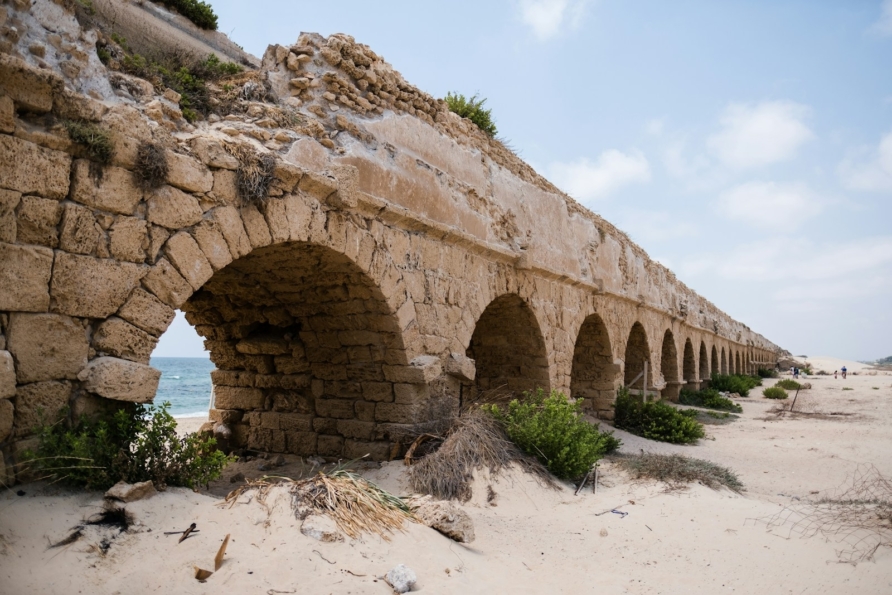
North of the main town, the Roman aqueduct that once brought fresh water from Mount Carmel to the city emerges at the coastline and runs parallel to the beach for several hundred metres before disappearing into the sand. This stretch of beach — the aqueduct on one side, the Mediterranean on the other — is one of the most photogenic spots in Israel and one of the most unusual swimming environments in the world.

Cycling

A well-maintained cycling path connects the main archaeological site, the marina, the beaches, and the surrounding countryside. Cycling is an excellent way to cover the dispersed attractions of Caesarea at a comfortable pace. Bike rental is available near the National Park entrance.

Staying in Caesarea: Why Short Term Rentals

Caesarea has very limited hotel infrastructure — there is one significant hotel property in the town, and it is expensive. For visitors who want to spend more than a day here, short term rentals are not just the best option — they are essentially the only practical one.

Access to a Remarkable Town

Caesarea’s residential community is one of the most beautiful in Israel — quiet, tree-lined streets, well-maintained gardens, and a general sense of order and quality that reflects the town’s distinctive character. Staying in a short term rental here means waking up in this environment, which is a genuinely different experience from staying in a hotel in a larger city and making a day trip.

Proximity to the Site

Many of Caesarea’s short term rental properties are within easy walking distance of the National Park, the marina, and the beaches. The ability to visit the archaeological site in the early morning — before the day-trip crowds arrive — and return again in the late afternoon when the light is at its most beautiful is one of the great advantages of basing yourself here.

Base for the Region

Caesarea’s central position on the coast makes it an excellent base for exploring a wider region. Tel Aviv is 45 minutes to the south; Haifa and the Bahá’í Gardens are 35 minutes to the north; the Carmel wine region is 30 minutes inland; and Akko (Acre), one of the best-preserved Crusader cities in the world, is an hour to the north. A short term rental in Caesarea allows you to explore all of these while returning each evening to one of the most pleasant towns in the country.

Space for Families

Caesarea is one of Israel’s most family-friendly destinations. The National Park is engaging for children of all ages, the beaches are clean and safe, the marina area has good restaurants with outdoor seating, and the cycling paths are ideal for family rides. A short term rental with multiple bedrooms and outdoor space transforms a visit here from a day trip into a proper holiday.

Short Term Rentals in Caesarea with KeyHost

KeyHost’s portfolio in Caesarea reflects the town’s distinctive character — properties selected for quality, setting, and proximity to the site and the sea. Every KeyHost property in Caesarea is professionally managed, with concierge service that can arrange National Park tickets, restaurant reservations, golf tee times, and guided archaeological tours.

The KeyHost team has detailed knowledge of Caesarea and the surrounding region, and this knowledge is available to every guest: the best time to visit the amphitheatre, the quietest beach sections, the restaurants that justify the short drive north towards Haifa, and the seasonal concert schedule at the ancient theatre.

Explore our Caesarea properties at keyhost.online.

Practical Information

Getting to Caesarea

By car: Caesarea is located on Route 2 (the coastal highway), approximately 50 kilometres north of Tel Aviv and 40 kilometres south of Haifa. The drive from Tel Aviv takes around 45 minutes without traffic. A car is strongly recommended — the town is spread out and public transport is limited.

By train: The Binyamina station, served by Israel Railways, is approximately 5 kilometres from Caesarea. Trains run from Tel Aviv and Haifa regularly. Taxis and some local transport connect the station to the town, but a car is more practical for exploring the full site.

By bus: Limited bus services connect Caesarea with Tel Aviv and Haifa. The bus is workable for a day trip but less practical for a stay with luggage and flexible itinerary.

Opening Hours and Tickets

The Caesarea National Park is open daily. Tickets can be purchased at the entrance or online in advance (recommended during peak periods). The price includes access to all areas of the site. An audio guide in multiple languages is available.

When to Visit

Caesarea is excellent year-round. Summer is hot (30–33°C) but the sea is perfect for swimming and the evening concert season at the amphitheatre is in full swing. Spring and autumn offer the most comfortable conditions for extended sightseeing. Winter is mild and the site is at its quietest — the archaeological areas are particularly atmospheric on a cool, overcast day.

The main festival season — when the amphitheatre hosts major concerts and international performers — runs from May through September. If attending a concert here is part of your plan, check the schedule at the Caesarea Amphitheatre website and book tickets well in advance.

For a complete overview of what to see, eat, and do in Caesarea, download our free Caesarea guide.

Frequently Asked Questions

How long do I need to visit Caesarea? A day trip allows you to see the highlights of the National Park and the marina. Two to three nights as a base allows you to explore the site properly, visit the nearby aqueduct beach, take day trips to Haifa and the Carmel region, and experience the town at its best in the early morning and evening.

Can I swim at the ruins? Yes. The beach adjacent to the National Park — where Roman columns emerge from the sand — is one of the most extraordinary swimming locations in Israel. The water is clean and clear.

Is Caesarea suitable for families with young children? Very much so. The National Park is engaging and accessible, the beaches are safe and well-supervised, and the marina area has child-friendly restaurants. The cycling paths are excellent for family rides.

Are there restaurants in Caesarea? Yes, and they are good. The marina area has several excellent restaurants ranging from casual seafood to more sophisticated dining. The quality of food in Caesarea is consistently high — the town’s affluent resident population ensures strong competition among its restaurants.

Is Caesarea expensive? Caesarea has a reputation as one of Israel’s more expensive destinations. Restaurant prices at the marina are higher than in Tel Aviv. Short term rentals, however, offer good value compared to the town’s limited hotel options, particularly for families or groups.

What else is near Caesarea? Within easy driving distance: Tel Aviv (45 min south), Haifa and the Bahá’í Gardens (35 min north), the Carmel wine region (30 min east), Akko/Acre (1 hr north), Megiddo/Armageddon (45 min east), and Zichron Ya’akov, a charming wine village (20 min south). For a broader perspective, our Tel Aviv vs Eilat comparison can also help you position Caesarea in your itinerary.

Final Thoughts

Caesarea is one of the most genuinely surprising places in Israel — a town that manages to be both archaeologically overwhelming and deeply pleasant to spend time in. The combination of a world-class ancient site, a beautiful Mediterranean coastline, excellent food, and a calm, well-maintained residential character makes it unlike anywhere else in the country.

Short term rentals give you the time to experience it properly: the early morning light on the Roman stones, the amphitheatre at sunset, the aqueduct beach at low tide. These are experiences that reward staying rather than passing through.

For premium short term rentals in Caesarea, explore the KeyHost portfolio at keyhost.online.

Discover Tiberias: A Unique Stay by the Sea of Galilee

Tiberias is one of Israel’s oldest cities and one of its most distinctive. Set on the western shore of the Sea of Galilee — the Kinneret, the country’s only freshwater lake — it holds a singular place in both Jewish and Christian history. Founded in the 1st century by Herod Antipas, designated as one of Judaism’s four holy cities, and surrounded by major New Testament sites, Tiberias offers a historical and spiritual depth that few Israeli destinations can match.

But Tiberias is not an open-air museum. It is a living lakeside city with a lively waterfront promenade, natural hot springs, authentic Galilean cuisine, and direct access to some of the finest landscapes in northern Israel. For travellers seeking something different from the pace of Tel Aviv or the intensity of Jerusalem, Tiberias offers exactly that: a stay where time slows down.

Short term rentals in Tiberias are the best way to experience the region — more space than a hotel, a real kitchen for everyday meals, and often a direct view of the lake. This guide covers everything you need to know.

Why Tiberias

Tiberias is the main urban centre of northern Israel and the natural base for exploring the Galilee. Its geographic position is exceptional: the lake stretches out in front, the hills of Galilee rise behind, and the Golan Heights are visible to the east. The lake itself sits 210 metres below sea level, creating a microclimate that is mild in winter and warm in summer.

The city attracts three types of visitors. Christian pilgrims, for whom the shores of the Sea of Galilee are the setting for Jesus’s ministry — Capernaum, Tabgha, the Mount of Beatitudes are all within 20 minutes. Travellers seeking nature and calm, who find here hiking, hot springs, kayaking on the Jordan, and sunsets over the lake of striking beauty. And Israeli families, for whom Tiberias is a classic holiday destination — especially during Passover and summer holidays.

For a full overview of all regions, see our complete guide to traveling in Israel.

The History of Tiberias

Tiberias was founded around 20 CE by Herod Antipas — the son of Herod the Great — and named in honour of the Roman Emperor Tiberius. The city quickly became an important centre of Jewish life after the destruction of the Second Temple in 70 CE. It was here that the Jerusalem Talmud was compiled, and the Hebrew vowel system (nikkud) was developed.

Tiberias is one of Judaism’s four holy cities, alongside Jerusalem, Hebron, and Safed. The tombs of Maimonides (Rabbi Moshe ben Maimon) and Rabbi Meir Baal HaNess draw Jewish visitors from around the world. For Christians, the lake region is inseparable from the Gospel narrative: it was here that Jesus recruited his first disciples, walked on the water, and delivered the Sermon on the Mount.

This dual spiritual significance gives Tiberias a particular atmosphere — a blend of devotion and everyday life that resembles nothing else in Israel.

What to See and Do

The Sea of Galilee

The Kinneret is the heart of everything. Israel’s largest freshwater lake — 21 kilometres long, 13 wide — offers a constantly shifting spectacle across hours and seasons. The water is calm, often a deep blue, and the shores alternate between pebble beaches, landscaped parks, and wild coves.

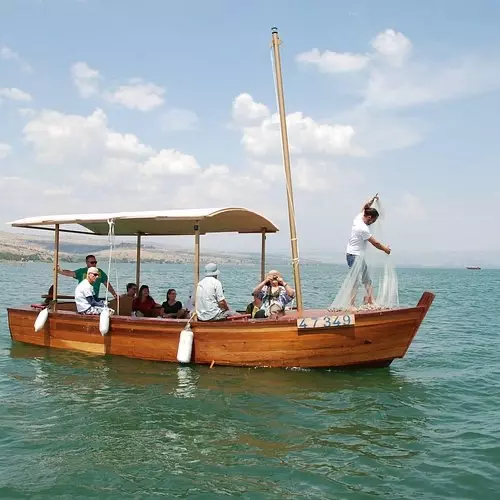
Swimming is pleasant from May through October. Kayaking, paddleboarding, and boat trips are all available. Wooden boat excursions reconstructing the vessels of biblical times depart regularly from the Tiberias port. Cycling the full loop around the lake — approximately 60 kilometres — is one of the finest cycling routes in the country.

Historical and Spiritual Sites

Capernaum — 15 minutes north of Tiberias, this is the site where Jesus is believed to have based his Galilean ministry. The ruins of a 4th-century synagogue and 1st-century dwellings are visible, and a modern church is built over what is identified as the house of the Apostle Peter.

Tabgha — the traditional site of the miracle of the loaves and fishes. The Church of the Multiplication houses remarkably well-preserved 5th-century Byzantine mosaics.

Mount of Beatitudes — the hill where, according to Christian tradition, Jesus delivered the Sermon on the Mount. The octagonal church built in 1938 is surrounded by manicured gardens with a panoramic view of the lake.

Tomb of Maimonides — in central Tiberias, the tomb of the greatest medieval Jewish philosopher is a major pilgrimage site. The site is simple but deeply significant.

Hammat Tiberias — just south of the city, this archaeological site contains the remains of a 4th-century synagogue with a zodiac mosaic floor — one of the finest examples of ancient Jewish art in Israel.

Hot Springs

The Tiberias region has been known since antiquity for its thermal springs. Hot, mineral-rich waters emerge naturally along the lakeshore. The Hamat Gader hot springs complex, approximately 30 minutes from Tiberias, offers open-air hot pools with views across the Golan hills — a particularly rewarding experience in winter.

Galilean Cuisine

The food of Tiberias and the Galilee is among the most authentic in Israel. The signature dish is St. Peter’s fish (lake tilapia), served grilled whole at waterfront restaurants. Local cuisine draws on Arab, Druze, and Eastern Jewish traditions — hummus, labneh, wild herbs, grilled meats, and bread fresh from the taboon oven.

On Fridays, the Tiberias market comes alive with stalls of fresh produce, spices, and local pastries. It is a markedly more authentic experience than the tourist-oriented markets of Tel Aviv or Jerusalem.

Hiking and Nature

The area around Tiberias offers some of the finest hiking in Israel. The Israel National Trail passes through the Galilee, and several sections are accessible from Tiberias. The Arbel cliffs — dramatic escarpments overlooking the lake — offer a short but impressive hike with breathtaking views.

The Jordan River, which flows into the lake from the north and exits to the south, provides the setting for rafting and kayaking, particularly in the Kfar Blum area, about 45 minutes north.

Day Trips from Tiberias

Tiberias is an ideal base for exploring the whole of northern Israel. Nazareth is 35 minutes west — the largest Arab city in Israel, with the Basilica of the Annunciation and exceptional Arab cuisine. Safed (Tzfat), the city of Kabbalah, is 40 minutes north — a maze of artist alleyways and historic synagogues perched in the mountains. The Golan Heights, with its wineries and Nimrod Fortress, is an hour east. And Caesarea, with its Roman amphitheatre and beaches, is 1h15 southwest along the coast.

For detailed guides to each destination in northern Israel, download our free city guides.

Where to Stay in Tiberias

Lakefront

Lakefront rentals offer the best of what Tiberias has — waking up to a view of the Kinneret, direct access to the promenade and beaches, and the shifting light on the water throughout the day. This is the most sought-after and enjoyable location for a stay of several nights.

City Centre

Central Tiberias is compact and walkable. Rentals here are more affordable and place you close to restaurants, shops, and the Tomb of Maimonides. The lakefront promenade is a few minutes’ walk away.

Hillside and Surroundings

The hills around Tiberias are home to more spacious rentals — often houses with gardens and pools — offering panoramic views of the lake and mountains. Ideal for families or groups with a car who want quiet and space.

Why Short Term Rentals in Tiberias

The hotel offering in Tiberias is adequate but unremarkable — mostly chains and mid-range properties without particular character. Short term rentals offer a markedly better alternative for several reasons.

Space. A two- or three-bedroom apartment gives families the room they need — separate bedrooms, living area, full kitchen — often for less than the cost of two hotel rooms.

Kitchen. The Tiberias market and local supermarkets are well-stocked. Preparing your own meals — especially breakfasts and lunches — frees up budget for restaurant dinners and activities.

Views. The best lakefront apartments offer views that only the city’s most expensive hotels can match, at a fraction of the price.

Extended stays. Tiberias naturally lends itself to stays of 4-5 nights or more to explore the north from a fixed base. Over that duration, the value proposition of a short term rental is unbeatable.

Short Term Rentals in Tiberias with KeyHost

KeyHost offers a curated portfolio of properties in Tiberias and the Sea of Galilee region, managed to the same standard as our rentals in Tel Aviv or Caesarea. Every property is professionally maintained, with concierge service covering arrival coordination, local recommendations, and support throughout your stay.

The KeyHost team knows the region in detail — the best hours to visit Capernaum before the crowds, the fish restaurants where locals eat, the least-trafficked hiking trails, and the seasonal events in the Galilean calendar.

Explore our Tiberias properties at keyhost.online.

Practical Information

Getting There

By car: Tiberias is approximately 150 kilometres from Tel Aviv (1h45) and 130 kilometres from Jerusalem (2 hours). The drive from Tel Aviv passes through the Jezreel Valley — one of the most spectacular landscapes in the country. A car is strongly recommended for exploring the Galilee and the sites around the lake.

By bus: Egged operates regular services between Tiberias, Tel Aviv, and Jerusalem. The journey from Tel Aviv takes approximately 2.5 hours. The Tiberias bus station is in the city centre.

By train: There is no train station in Tiberias. The nearest station is in Afula (45 minutes by car), connected by train to Tel Aviv and Haifa.

Best Time to Visit

Spring (March–May) is the ideal period — the hills are green, wildflowers carpet the Galilee, and temperatures are pleasant (20–28°C). Autumn (September–November) is equally excellent. Summer is very hot in Tiberias (35–40°C) due to the sub-sea-level altitude, but the lake provides welcome relief. Winter is mild (12–18°C) and can be rainy, but the hot springs are at their best.

Shabbat in Tiberias

Tiberias is more traditional than Tel Aviv. During Shabbat (Friday evening to Saturday evening), most shops and restaurants close. Stock up on supplies before Friday afternoon and identify the few restaurants that remain open. It is also one of the most peaceful times to enjoy the lake.

Frequently Asked Questions

How long should I spend in Tiberias? Two nights is enough to see the main sites and enjoy the lake. Four to five nights allows you to explore the Galilee in depth — Nazareth, Safed, the Golan, the hikes, and the hot springs.

Can I swim in the lake? Yes. Several maintained beaches line the lake, some with facilities (showers, sun loungers). The water is pleasant from May through October.

Is Tiberias suitable for families? Very much so. The lake offers safe water activities, the historical sites are accessible to children, and the calm pace of the city suits families with young children.

Do I need a car? Strongly recommended. The sites around the lake and across the Galilee are dispersed and poorly served by public transport. With a car, Tiberias becomes the perfect base for exploring the entire north.

How far is it from Tel Aviv? Approximately 150 kilometres — 1h45 by car, 2.5 hours by bus.

Final Thoughts

Tiberias offers what few Israeli destinations can rival: the combination of genuine historical and spiritual depth, a spectacular natural setting, and an atmosphere that invites you to slow down. It is neither the glamour of Tel Aviv nor the gravity of Jerusalem — it is something else, something quieter and more rooted.

Staying in a short term rental by the lake is giving yourself the time to live at this pace. Waking up facing the Kinneret, having coffee on the balcony, setting out to explore a trail or a biblical site, coming back to prepare dinner with produce from the market. It is a stay that does not rush — and that is exactly what makes it memorable.

For premium short term rentals in Tiberias, explore the KeyHost portfolio at keyhost.online.

Discover Tel Aviv: The Ultimate Guide for an Exceptional Stay

Tel Aviv is not just a destination — it is an experience. Known for its vibrant energy, Mediterranean coastline, and cosmopolitan lifestyle, the city attracts travelers from all over the world seeking a unique blend of relaxation, culture, and nightlife.

Choosing short term rentals in Tel Aviv allows you to fully immerse yourself in this dynamic environment while enjoying the comfort and flexibility of a private space.

Unlike traditional hotels, a premium apartment gives you the freedom to live the city at your own pace.

Continue reading “Discover Tel Aviv: The Ultimate Guide for an Exceptional Stay”